

ABSTRACT
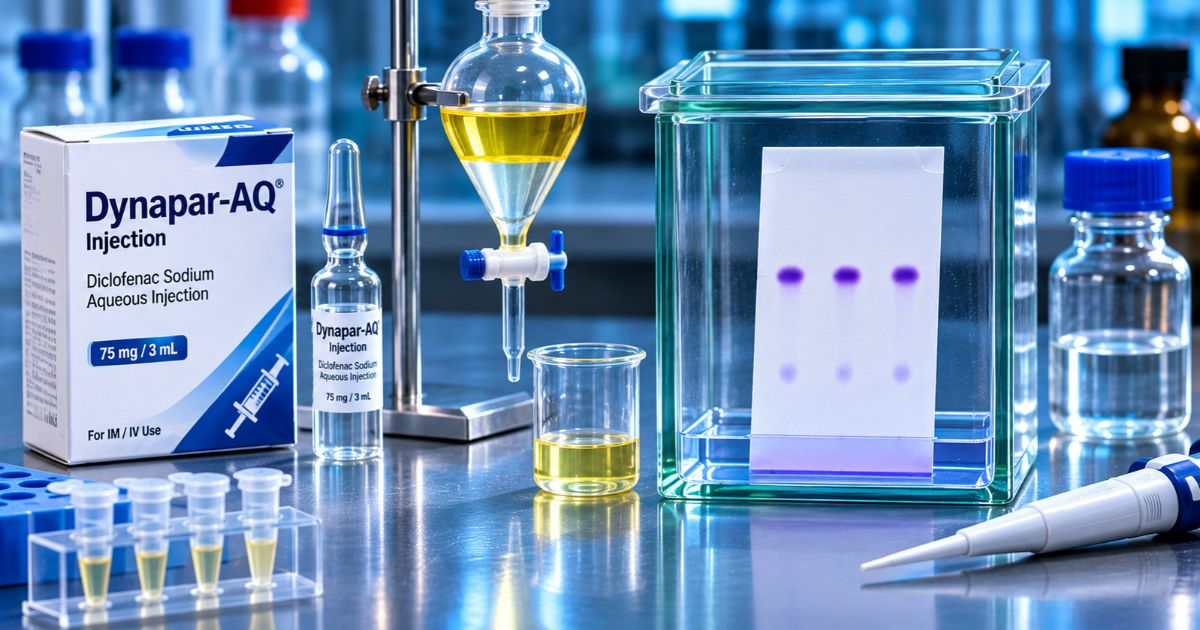
A simple and cost-effective thin-layer chromatography (TLC) method was developed for the separation and presumptive identification of the active constituent(s) of Dynapar-AQ injection following liquid–liquid extraction (LLE) and concentration [1,4,10,16]. The injectable formulation (1 mL) was diluted, acidified, and extracted using ethyl acetate (3 × 5 mL). The pooled organic phase was dried over anhydrous sodium sulfate, concentrated, and reconstituted in acetone according to established extraction and sample clean-up procedures [4,6,12]. Chromatographic separation was carried out on silica gel plates using two mobile phases: ethyl acetate : methanol : glacial acetic acid (8:2:0.1) and chloroform : methanol : acetic acid (9:1:0.1), selected based on previously reported TLC methodologies [1,3,5,10].
Visualization was achieved under ultraviolet light (254 and 366 nm) and by spraying with Dragendorff reagent [5,8,9]. The Dynapar standard and sample exhibited comparable chromatographic behavior, producing a single major spot with reproducible Rf values, thereby supporting presumptive identification. The developed LLE–TLC method proved to be rapid, inexpensive, and reproducible, and is suitable as a screening technique in forensic and toxicological laboratories [11,16,19]. Methodological choices regarding solvent systems, extraction conditions, and visualization reagents were guided by established TLC and forensic extraction practices reported in the literature [1,3,4,10,16].
Keywords: Dynapar-AQ, thin-layer chromatography, liquid–liquid extraction, Dragendorff reagent, etc.